
Case File 006 — Animation & Pitch Video
Umami
An animated restaurant concept that lets customers build their own sushi, ingredient by ingredient — pitched as a fully animated roadshow video instead of a slide deck.
01 — Overview
About the project
Umami is a customizable sushi restaurant concept developed for the Model Entrepreneur Competition by an eight-person business team. While the group collaborated on the broader business proposal, another teammate and I created the animated pitch video presented here.
Instead of choosing only from a fixed menu, customers could select the ingredients inside their sushi and experiment with new or unexpected combinations.
The goal was to make sushi ordering more flexible while keeping the experience quick, accessible, and easy to understand.
02 — Choosing Animation Over Slides
Choosing animation over slides
When our team reviewed roadshow videos from previous MEC competitions, many relied on traditional presentation slides. While slides were easier to produce, they often felt repetitive and difficult to remember.
I proposed presenting Umami through animation instead.
At first, some team members were hesitant because only two of us had animation experience. To make the direction more concrete, I created visual demos and helped develop a storyboard showing how the restaurant concept could unfold through a customer's ordering journey.
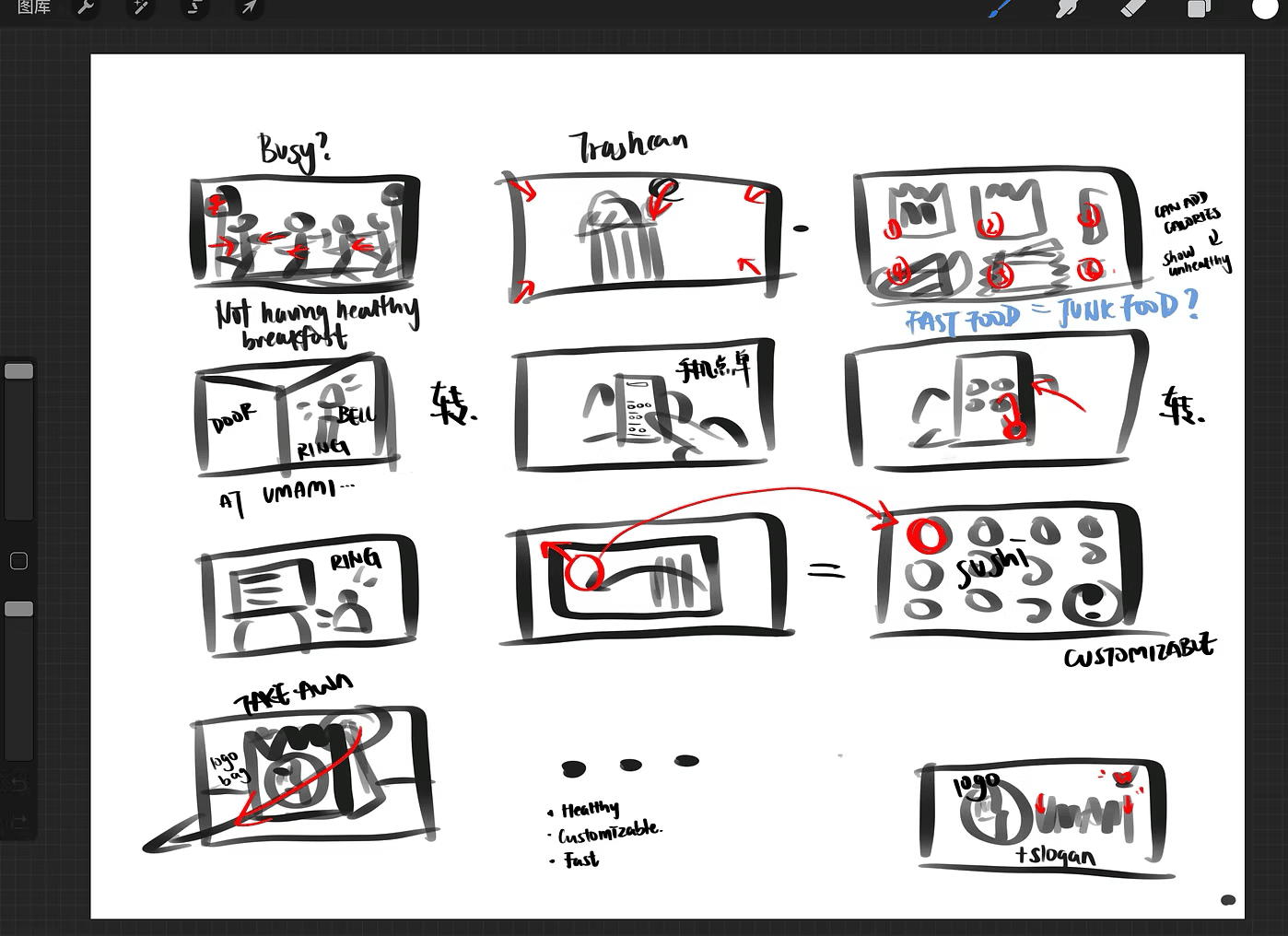
Once the team saw how the scenes could connect, we decided to build the pitch as a fully animated video rather than a conventional slide presentation.
03 — Building the Video
Building the video
The animation was created frame by frame in Procreate and edited in CapCut. Our process included:
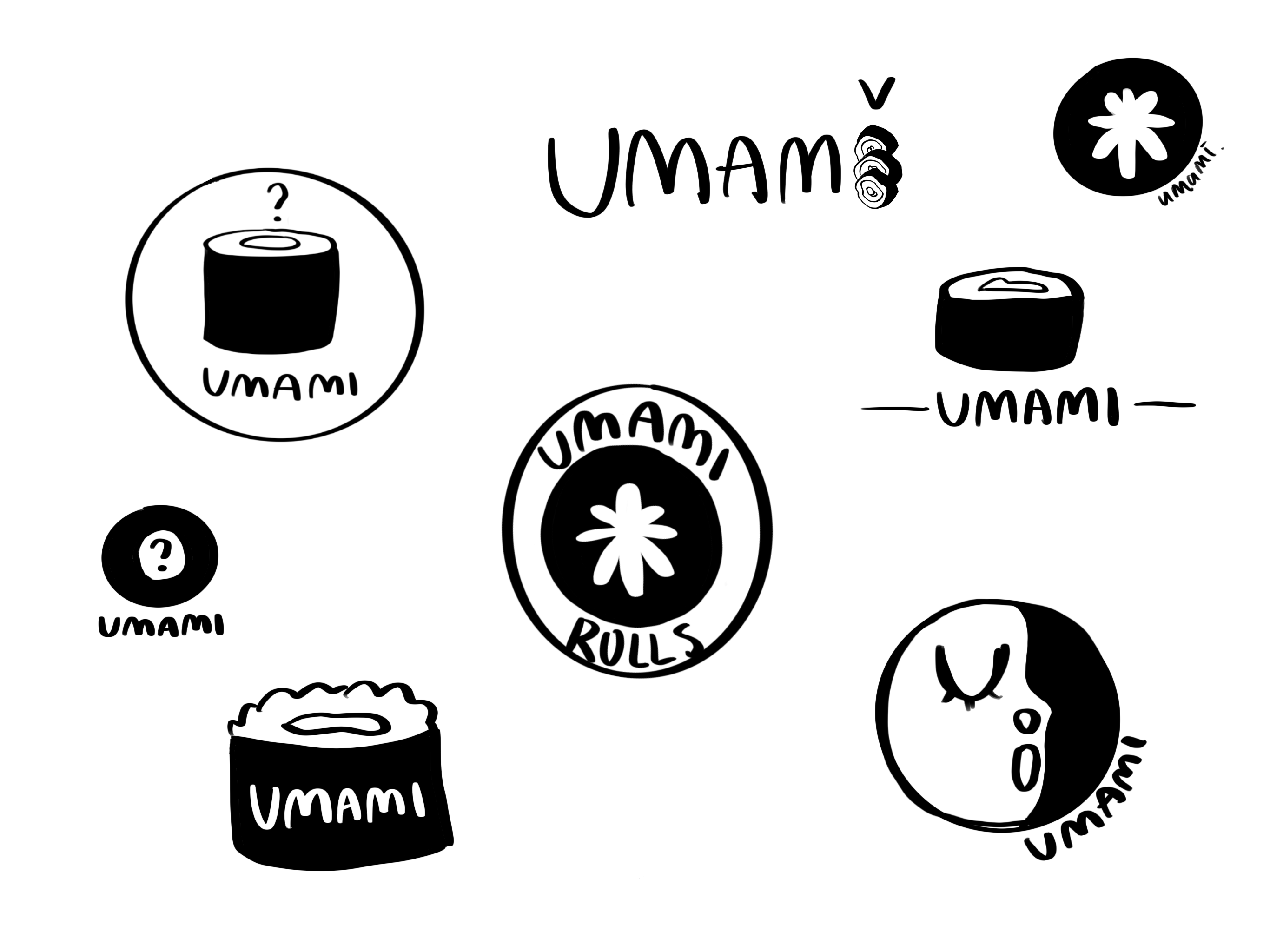
- Storyboarding the ordering journey
- Designing the restaurant, ingredients, and interface
- Drawing multiple versions of each scene
- Testing transitions and pacing
- Removing scenes that slowed down the explanation
- Adjusting animation speed
- Adding music and sound effects
- Editing the scenes into one final roadshow video
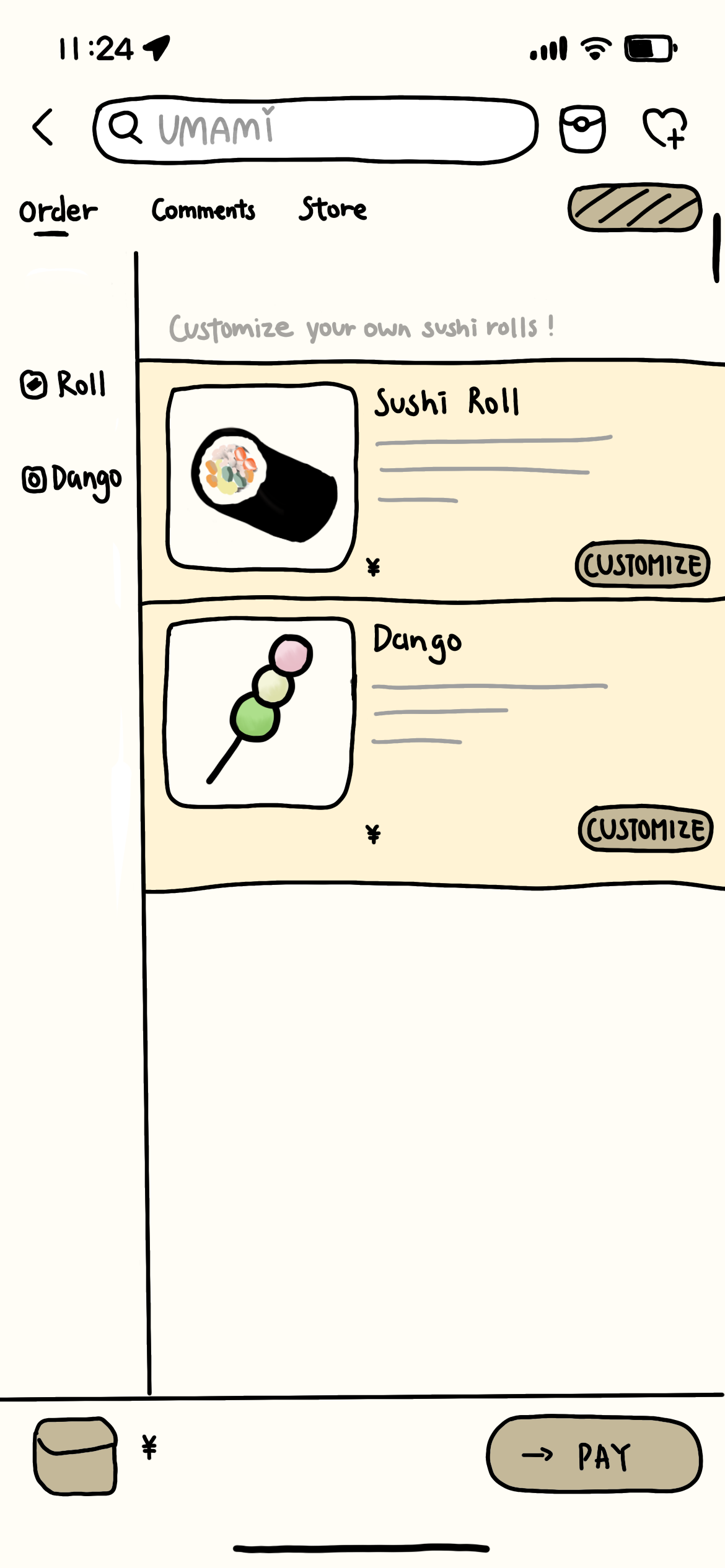
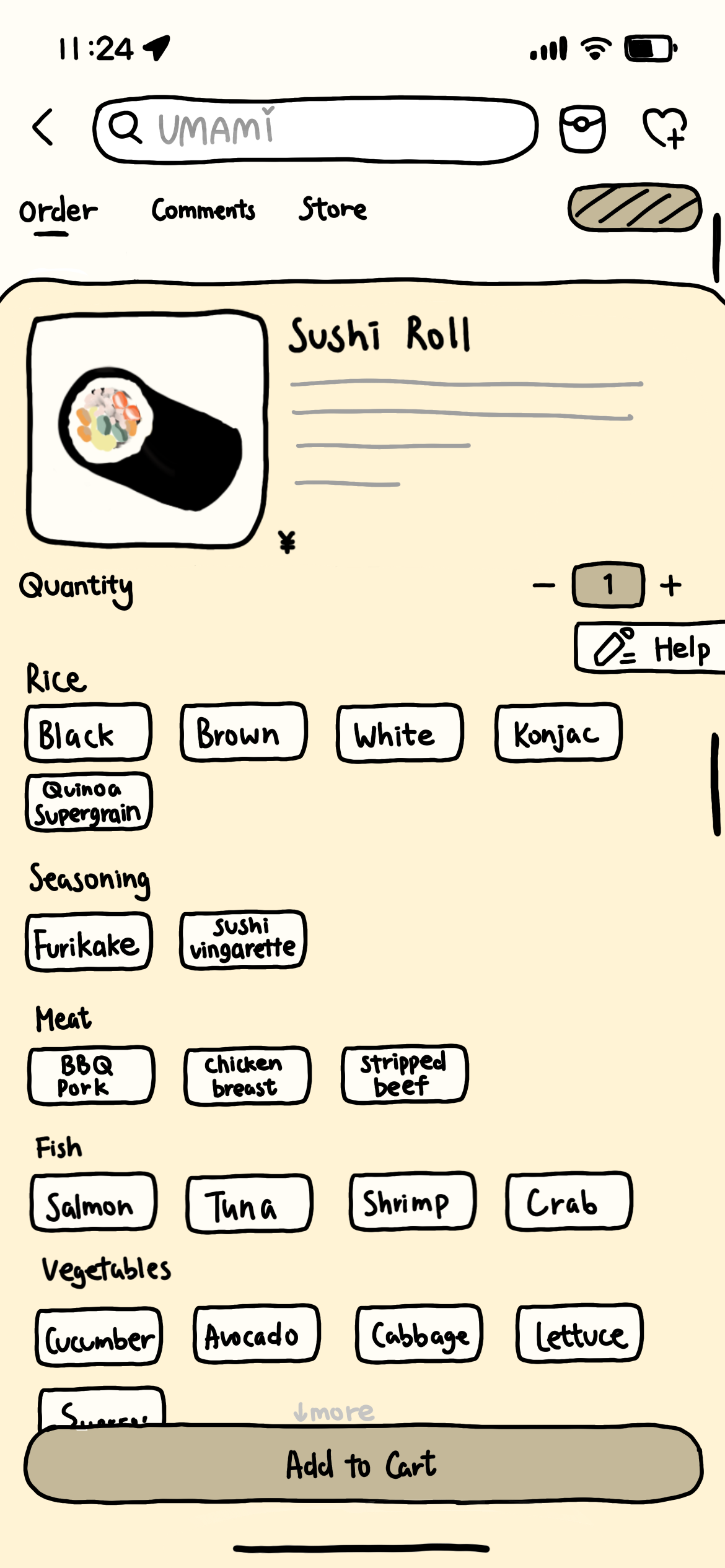
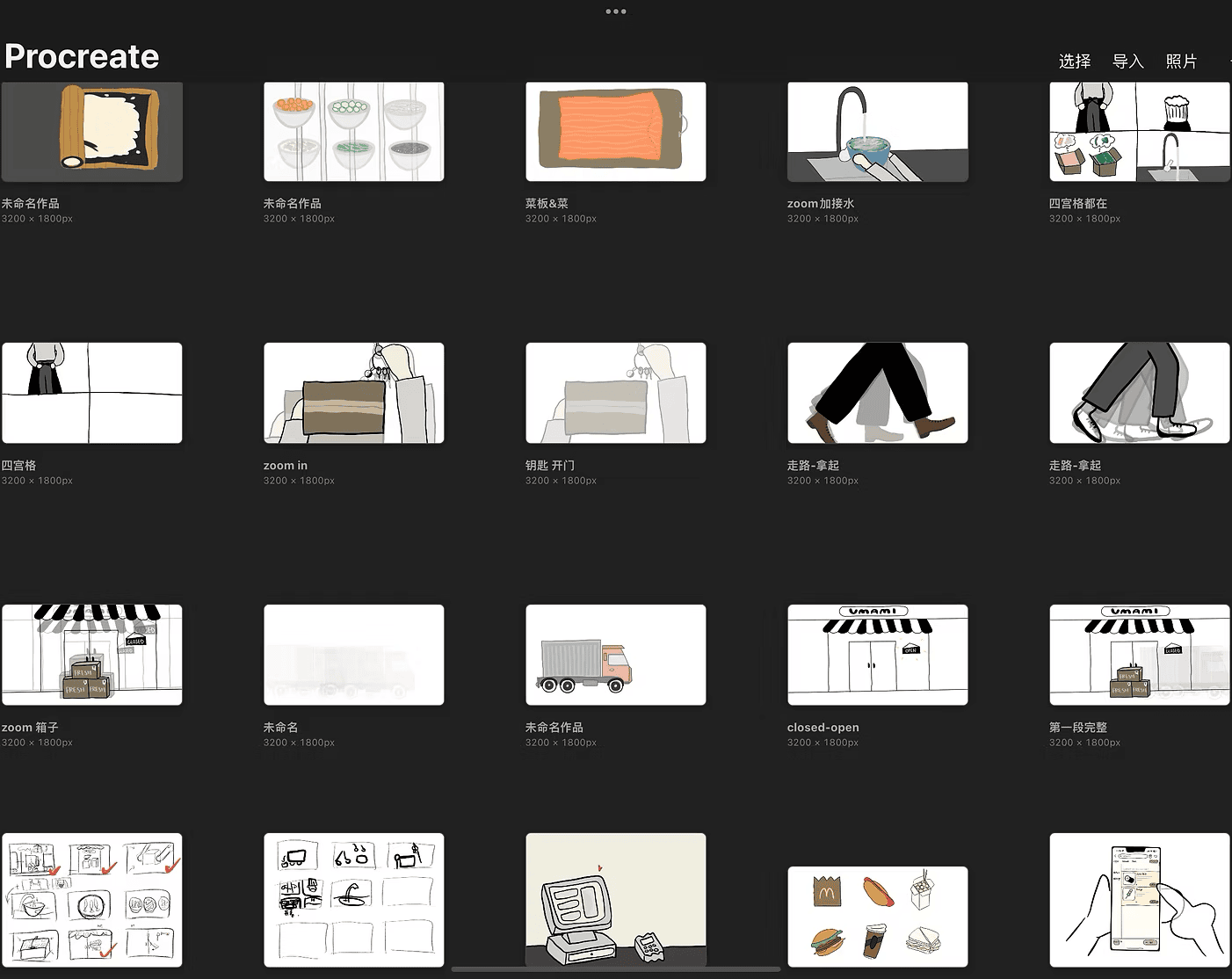
Not every idea made it into the final version. Some scenes were simplified or removed to keep the explanation focused and maintain the pace of the pitch.
The final video showed how a customer could select ingredients, create a personalized sushi order, and receive it quickly and efficiently.
04 — Reflection
Reflection
The strongest part of Umami was the decision to communicate the concept through animation rather than a conventional pitch deck.
The process required more time, but it allowed us to demonstrate the service instead of only describing it. Movement, sequencing, and sound made the ordering system easier to understand and gave the business proposal a more distinctive visual identity.
The project also showed me the value of prototyping an idea before asking a team to commit to it. The early animation tests and storyboard helped turn an unfamiliar approach into something the group could evaluate and support.
Looking back, I am still proud that we followed through on the more ambitious direction. Umami became not only a restaurant proposal, but also an early experiment in using visual storytelling to make a business idea feel immediate and memorable.