Making Cleanup Visible:
Quarterly Updates & Ecological Pilot Program
Submitted to: U.S. EPA Region 2 • New York State Environmental Facilities Corporation (NYSEFC)
Overview
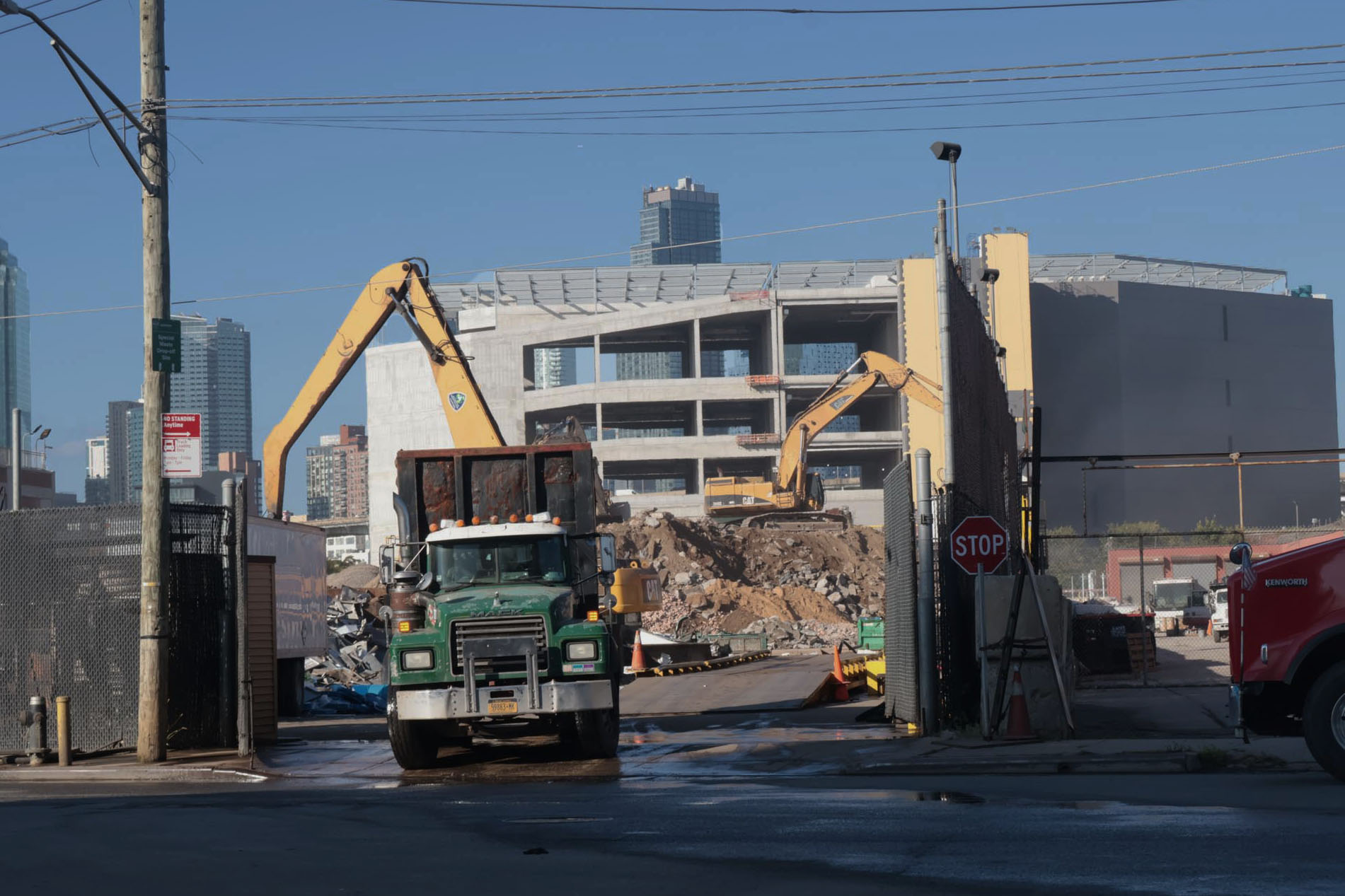
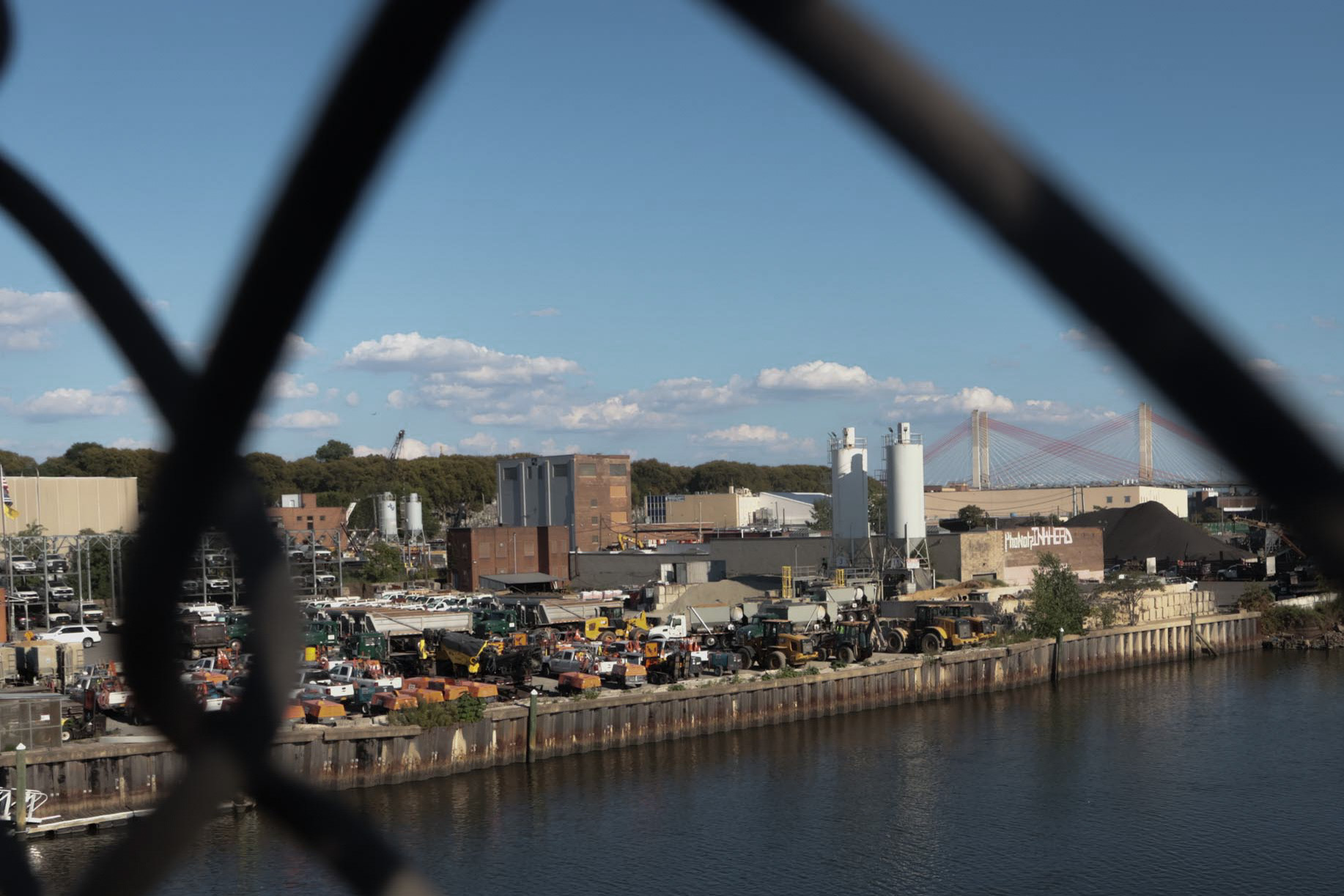
Newtown Creek is one of the country’s most complex Superfund sites. Decades of investigation have mapped the contamination, yet full-scale cleanup has not begun because the modeling and remedial design phase remains lengthy and technically demanding.
Through interviews, field observation, and data review, two central issues emerged:
- The cleanup is largely invisible to the public, creating frustration and distrust.
- No early ecological action is occurring while long-term remediation is designed.
EPA has been clear that this slow pace is largely due to the complexity of the modeling, which must be accurate before the remedy can be finalized. But this creates a gap between scientific progress and visible progress. This proposal offers a way to strengthen both.

Quarterly Progress Digest
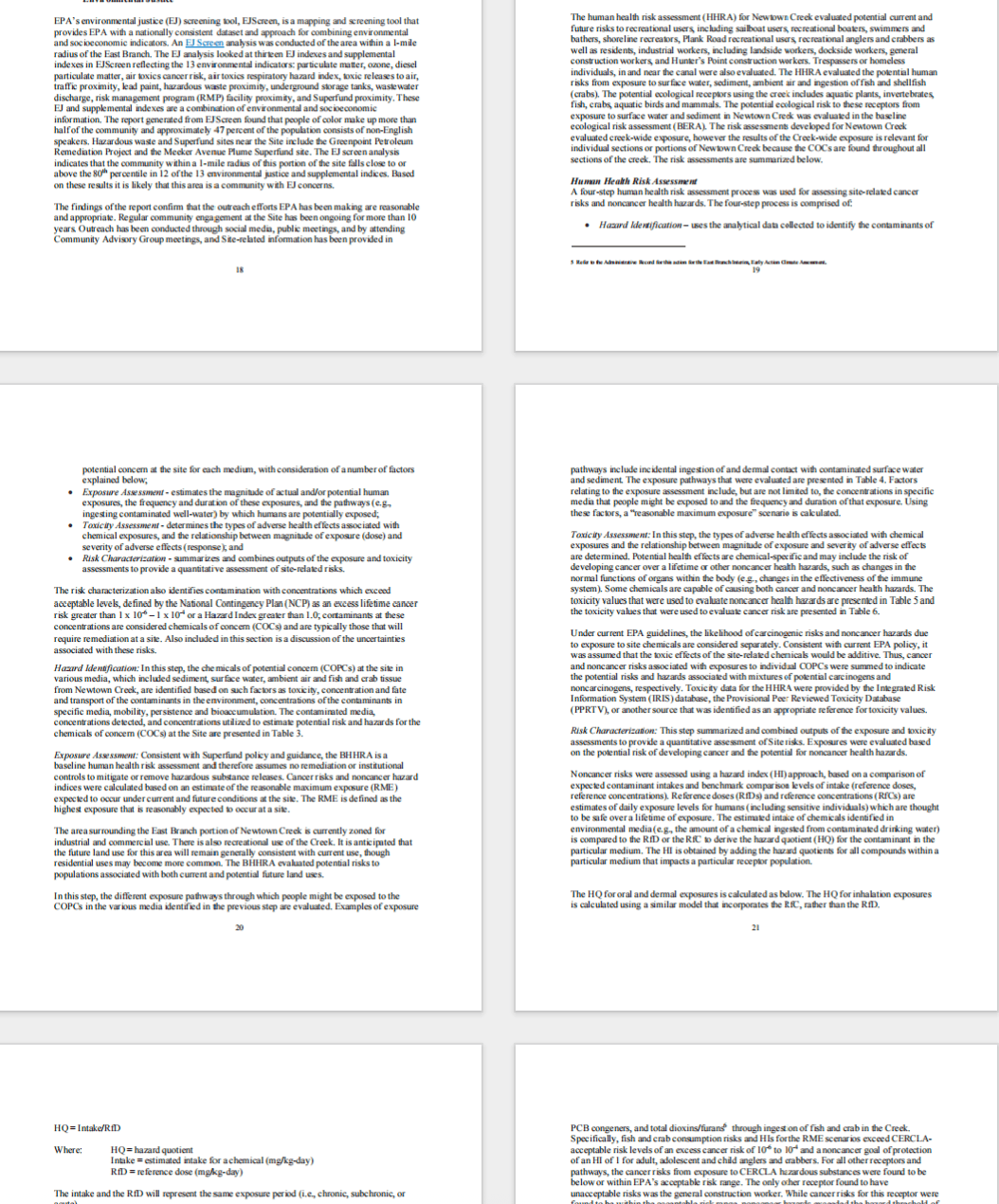
Request that EPA Region 2 issue concise, user-focused quarterly updates that distill the ongoing Superfund work into clear, accessible takeaways. Each report would outline:
- New findings from the last quarter
- Outstanding questions and upcoming investigative steps
- Concrete goals for the next 90 days
- How community input has shaped decisions
- Translated versions (Spanish, Chinese, Polish)
These digests do not add new work. They repackage information EPA already has into a format the public can actually follow. These reports would improve accessibility and comprehension for non-specialists. When people can see a clear road map, the long modeling phase becomes understandable rather than opaque.
Ecological Early Action Pilots
The second component is the introduction of small-scale ecological pilot projects in areas where they won’t conflict with the final remedy. These pilots could include:
- Constructed micro-wetlands: drawing on Nirmela Govinda’s findings that constructed wetlands can deliver high denitrification rates comparable to natural marshes.
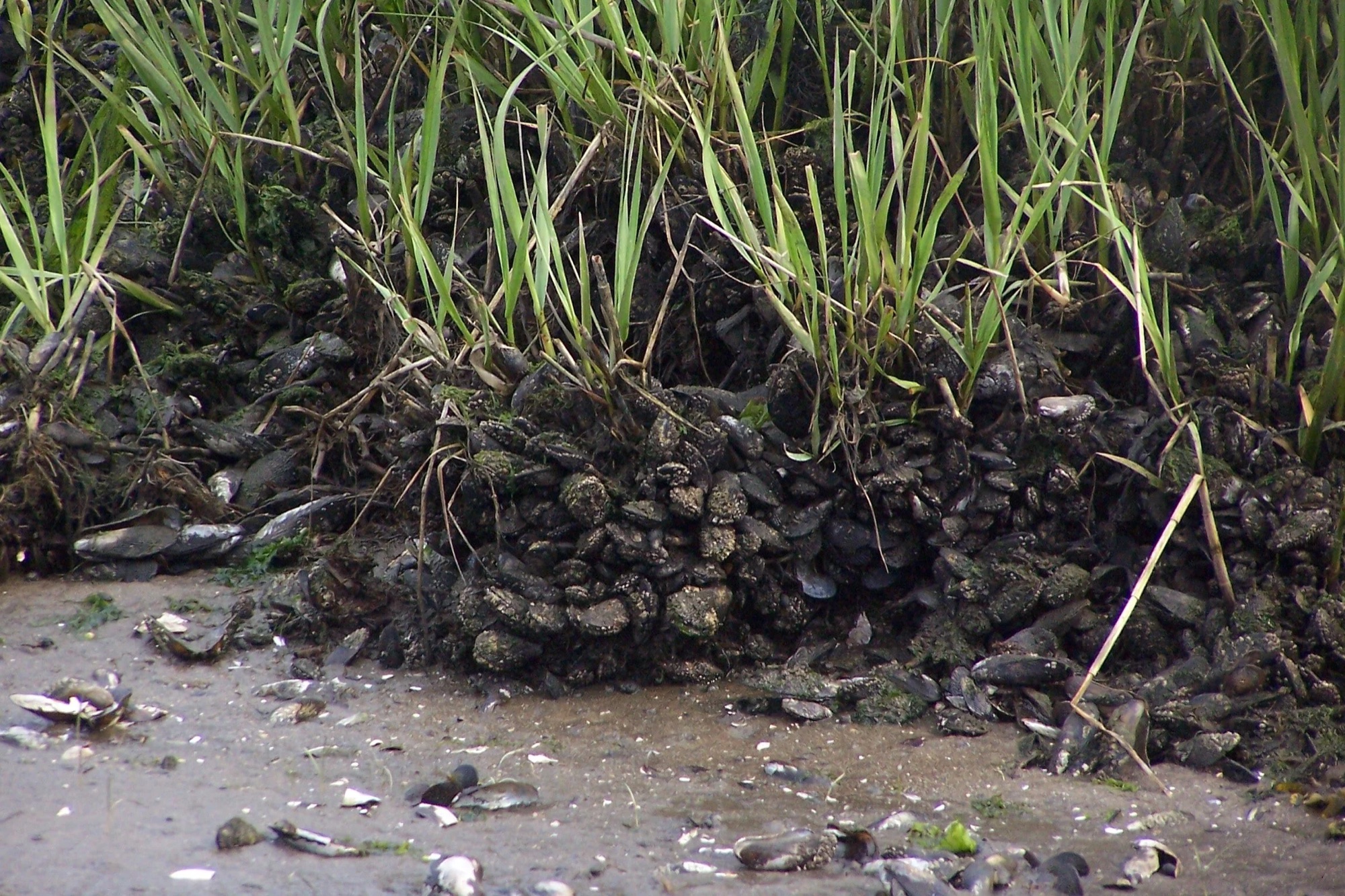
- Ribbed mussel / oyster beds: increase water filtration and enhance denitrification via mussel–cordgrass mutualisms; oyster restoration is already an active, scalable program in NYC (Billion Oyster Project). Local pilot projects both improve water clarity and increase community engagement.
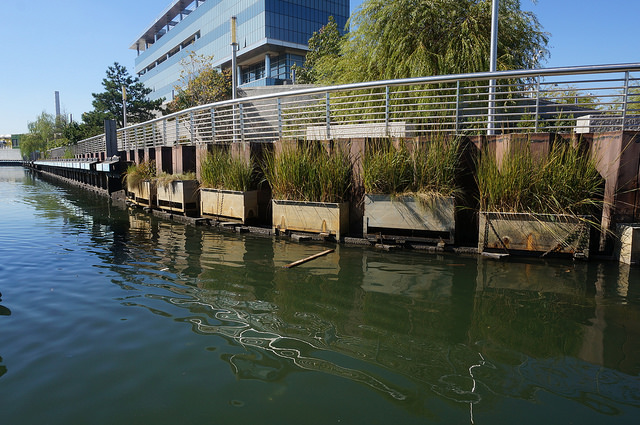
- Floating treatment wetlands: widely used for stormwater and polluted urban water bodies to uptake nutrients and support microbial degradation while avoiding sediment disturbance — a low-impact interim strategy for contaminated waterways.
Benefits
- Provides the community with visible progress
- Generates early ecological uplift
- Produces localized data that can support long-term restoration
- Builds a sense of momentum during an otherwise stagnant phase
Estimated Cost & Funding
The NYC DEP’s Jamaica Bay floating wetland pilot (2015) cost ~$500,000 over two years and successfully demonstrated that small-scale, well-designed ecological experiments can generate real, measurable benefits even before large-scale restoration begins.
The project provided key outcomes:
- Wave reduction data that helped inform later marsh-restoration engineering.
- Proof-of-concept that floating vegetated structures can survive harsh NYC estuary conditions.
- A model for scaling up, which later influenced multimillion-dollar wetland restoration plans in the bay.
- Interagency collaboration between DEP, scientists, and community partners.
Newtown Creek can replicate the Jamaica Bay model at a smaller scale, producing early ecological gains, supporting EPA’s risk-based approach, and giving the community tangible progress while the larger cleanup is still being designed.
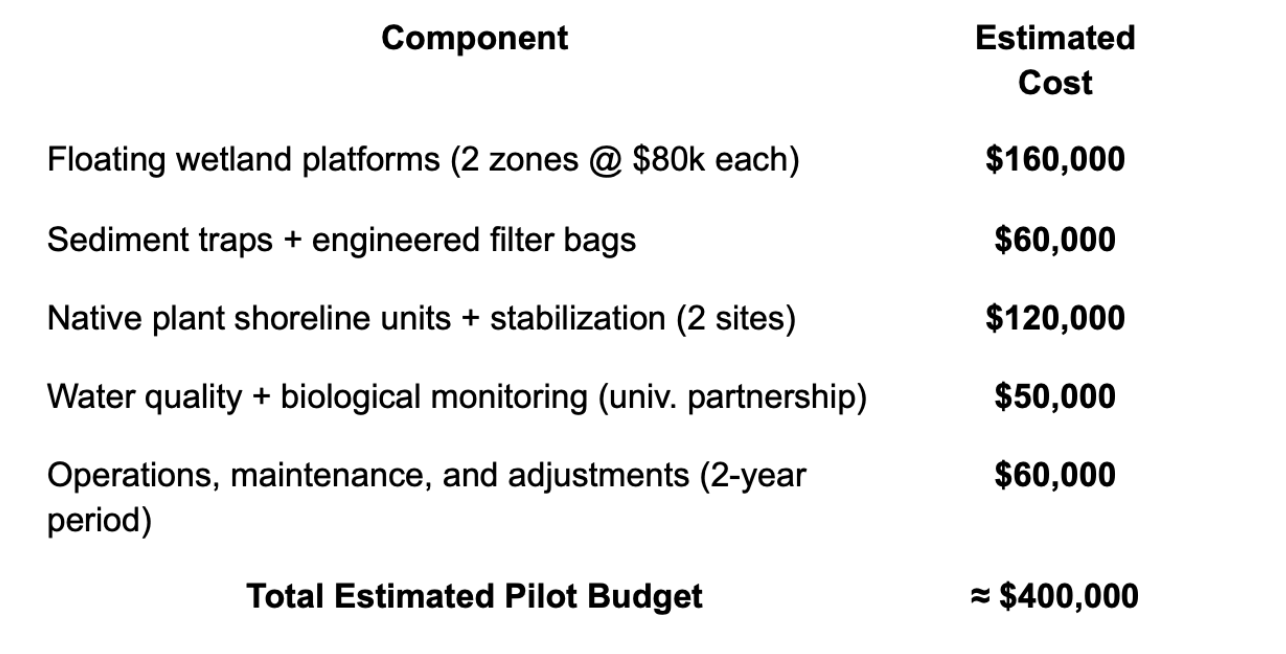
Potential funding pathway: NYSEFC WIIA (Water Infrastructure Improvement & Intermunicipal) Grant
The NYSEFC’s WIIA program provides large-scale state funding for municipal water infrastructure, supporting projects that reduce pollution, improve stormwater and wastewater systems, and benefit environmental justice communities. The program routinely awards multi-million-dollar grants, with some of the largest recent awards reaching $25 million, the maximum allowed for individual clean water projects. Your proposed ecological pilot fits squarely within WIIA’s goals because it reduces pollutant loads, enhances ecosystem function, and generates data that prepares Newtown Creek for future large-scale remediation.
Timeline
- Months 0-2: Pre-launch coordination —— pilot protocol, conflict check with modeling (low-impact zones)
- Months 2-5: Site selection & Design—— Determine fast-check zones based on risk, access, and community relevance. Conduct baseline surveys of water quality, condition, mapping etc. and site-specific design.
- Months 5-9: Permitting & Compliance—— approvals, Confirm operation and maintenance plan
- Months 9-11: Fabrication—— construct floating wetland modules, build test structures
- Months 11-13: Installation (avoid winter, aim for early spring - summer) —— install floating wetlands, ribbed mussels etc., each invasion is removable and non-invasive.
- Months 13-24: Monitoring & Evaluation——monitor different parameters, delivered alongside quarterly progress reports. Evaluate on ecological outcome, public response, and scale-up recommendations.
Conclusion
This proposal directly addresses the structural challenge at the heart of the Newtown Creek cleanup. The dual strategy presented here strengthens both sides of the cleanup:
- Quarterly Progress Digests make this long technical phase comprehensible and transparent, giving the public predictable updates, clear expectations, and a better understanding of why the process takes time.
- Ecological Pilot Projects that do not interfere with modeling or future dredging. These pilots provide visible environmental benefits, generate useful monitoring data, and reduce community frustration while the final Record of Decision is being completed.
Together, these components transform the slowest, least visible part of the Superfund process into a period of real, measurable progress, protecting EPA’s scientific modeling while improving public trust, ecological health, and community engagement.